
Sustainability in Aviation: SAF’s Promise vs. the Harsh Reality of Slow Progress
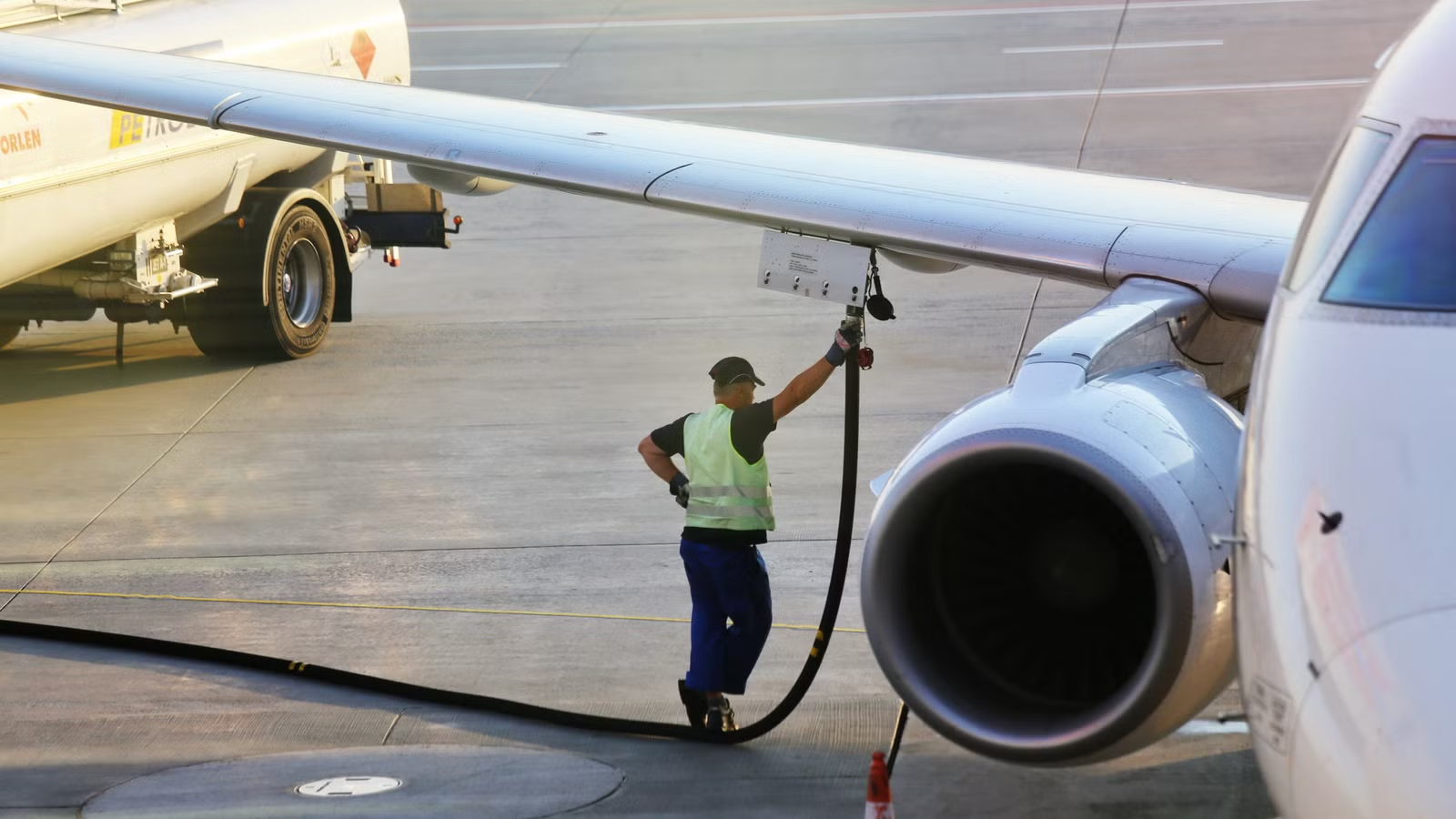
The aviation industry’s commitment to net-zero CO₂ emissions by 2050 is laudable, and Sustainable Aviation Fuel (SAF) stands as the cornerstone near- and medium-term solution. SAF can deliver up to 80% lifecycle emissions reductions compared to conventional jet fuel, serves as a “drop-in” replacement compatible with existing aircraft and infrastructure, and is projected to contribute around 65% of the necessary decarbonization by mid-century.
Yet, as we enter 2026, progress feels disappointingly incremental. SAF usage is expected to remain below 1% of total fuel demand, hampered by production costs that are 2–4 times higher than traditional fuel, limited feedstock availability (despite sufficient sustainable sources in theory), and fragmented global policies. Initiatives like CORSIA and regional mandates (e.g., ReFuelEU Aviation) aim to accelerate adoption, but misalignment between schemes increases costs and limits genuine impact. Meanwhile, zero-emission technologies like hydrogen or electric aircraft lag further behind for long-haul applications, confined to short-range or experimental roles.
In opinion, the industry risks greenwashing if it continues over-relying on aspirational targets without aggressive scaling of SAF production. Governments must harmonize incentives, invest in feedstock and biorefinery infrastructure, and avoid over-fragmentation. Airlines and fuel producers need bolder partnerships to drive costs down. Without these steps, sustainability will remain a costly checkbox rather than a transformative force—potentially eroding public trust and inviting stricter regulations that could penalize the sector disproportionately.