

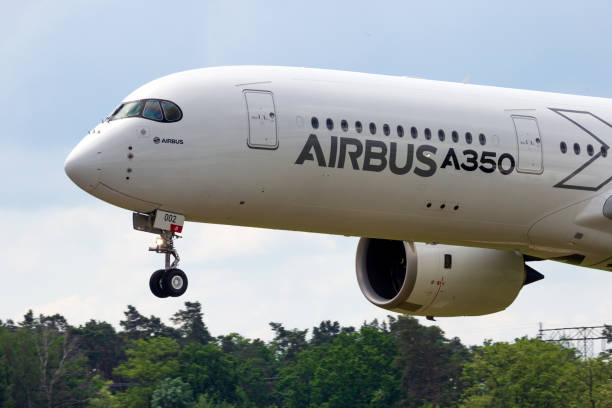
Why Aircraft Windows are Round or Oval ?
Ever wondered why airplane windows are perfectly rounded (or oval with smooth curves) instead of square like in your house or car? ✈️ It’s not just for looks—it’s a critical safety feature born from a tragic chapter in aviation history.
Back in the early 1950s, the de Havilland Comet became the world’s first commercial jet airliner, promising faster, higher, and smoother flights with its pressurized cabin and large, square-ish windows. But disaster struck: In 1954, two Comets (BOAC Flight 781 and another) suffered explosive mid-air decompressions, killing dozens. Wreckage analysis and rigorous water-tank fatigue tests revealed the culprit—metal fatigue from repeated pressurization cycles.
The sharp corners of those square windows created stress concentrations—points where pressure forces built up intensely (2-3 times higher than elsewhere). Over thousands of flights, tiny cracks formed and propagated rapidly, tearing the fuselage apart. The pressurized cabin (like an inflated tube) expands and contracts dramatically with altitude changes, amplifying this issue.
Engineers learned the hard way: Rounded or oval shapes distribute stress evenly around the frame, eliminating those deadly corner weak spots. No sharp angles = no focal points for cracks. This simple change became industry standard, saving countless lives since.
Modern airplane windows are even more advanced:
- Made of tough acrylic (not glass) in multiple layers for redundancy.
- Outer pane handles primary pressure load.
- Middle pane acts as backup.
- Inner pane protects passengers and includes a tiny bleed hole to equalize pressure and prevent fogging.
- Designs like the Boeing 787 Dreamliner feature larger, rounded windows for better views and natural light, thanks to stronger composite materials—but still no sharp corners!
Even today, square windows would be a no-go: They’d fatigue faster, demand heavier reinforcements, and risk structural failure. Aviation prioritizes safety through physics—round wins for strength, aerodynamics, and passenger comfort.
Next time you gaze out at the clouds, appreciate those elegant curves—they’re engineering genius keeping you safe at 35,000 feet! 🌍