
The End of an Era: UPS Retires Its MD-11 Freighter Fleet
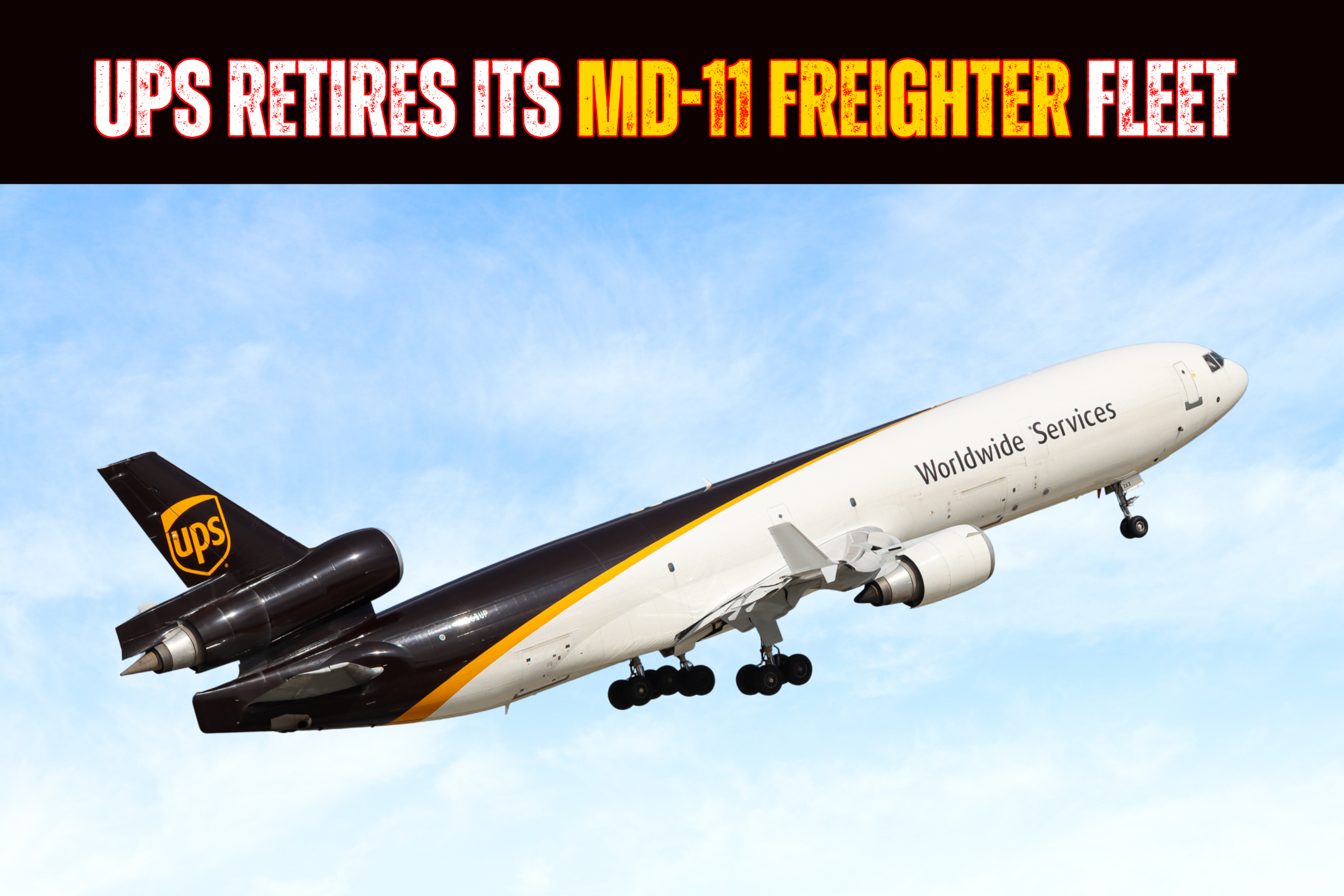
In a significant shift for global air cargo operations, United Parcel Service (UPS) has permanently retired its entire fleet of McDonnell Douglas MD-11 freighters. This decision, announced in late January 2026 during the company’s fourth-quarter 2025 earnings call, accelerates a long-planned fleet modernization effort and marks the closure of a chapter for one of aviation’s most recognizable trijet designs in major U.S. cargo service.
The move follows a tragic incident on November 4, 2025, when UPS Flight 2976—an MD-11F—crashed shortly after takeoff from Louisville Muhammad Ali International Airport (SDF) in Kentucky. The aircraft suffered a catastrophic separation of its left engine during the takeoff roll due to a failure in the engine pylon structure, leading to an immediate loss of control. The jet impacted the ground in an industrial area, resulting in a massive fire and the loss of all three crew members on board, plus 12 fatalities on the ground (with one additional death later from injuries), and dozens more injured. The National Transportation Safety Board (NTSB) investigation identified fatigue cracking in a critical mounting component—a metal housing around a bearing in the engine pylon assembly—as the primary cause, echoing structural concerns seen in earlier trijet incidents.
In response, the Federal Aviation Administration (FAA) issued an emergency airworthiness directive grounding all MD-11 operations in the U.S., affecting both UPS and FedEx fleets. While the grounding created operational challenges, UPS chose not to resume MD-11 flights. The company completed the retirement of its remaining 26 MD-11Fs during the fourth quarter of 2025, incurring a non-cash, after-tax charge of approximately $137 million as part of the write-off. This represented about 9% of UPS’s total air fleet capacity at the time, with the aircraft primarily used for domestic and some international routes.
UPS has emphasized a “systematic programmatic approach to modernizing” its global air network. The MD-11s, with an average age exceeding 31 years, are being replaced by more fuel-efficient twin-engine freighters, particularly the Boeing 767-300F. The carrier plans to introduce 18 new 767s over the next 15 months or so, which offer superior operating economics, lower maintenance demands, and better environmental performance compared to the three-engine MD-11. This transition aligns with broader industry trends toward twinjets for cargo, driven by fuel costs, ETOPS capabilities for extended routes, and sustainability goals.
FedEx, the other primary U.S. operator of the MD-11 (with roughly two dozen remaining), has adopted a different strategy. The carrier announced plans to return its grounded MD-11 fleet to service by May 31, 2026, following targeted inspections, potential modifications, and coordination with Boeing and the FAA. This contrast underscores varying approaches to risk and fleet longevity: UPS opted for a decisive exit amid regulatory uncertainty and tragedy, while FedEx pursues continued use after addressing identified issues.
A Retrospective on the McDonnell Douglas MD-11
Introduced in the early 1990s as an advanced, stretched derivative of the DC-10, the MD-11 featured three engines (two underwing Pratt & Whitney or General Electric turbofans, plus one tail-mounted), a high payload capacity, and impressive range suited to long-haul cargo. In freighter configuration, it became a workhorse for express carriers in the 1990s and 2000s, handling high-volume transoceanic and domestic operations.
However, the type inherited some design challenges from its DC-10 predecessor, including vulnerabilities in wing-engine pylon integration under repeated high-cycle stress and fatigue. Combined with higher fuel consumption than modern twins, greater maintenance complexity from the third engine, and age-related issues like corrosion, the MD-11 has seen steady phase-outs across the industry. Passenger versions largely disappeared years ago (the last with KLM in 2014), and cargo retirements have accelerated in recent years.
Looking Ahead for Air Cargo
UPS’s full withdrawal from the MD-11 signals the near-end of trijet freighters in large-scale U.S. operations. While a few may persist globally or with smaller operators, the type’s future is limited. This incident reinforces the critical importance of rigorous structural monitoring and proactive retirement planning for aging aircraft fleets—especially high-stress components like engine pylons.
The broader air cargo sector continues its push toward efficiency and modernization. With ongoing demand for express delivery and e-commerce growth, investments in newer-generation freighters like the 767F, 777F, and even emerging types will define the next decade. For UPS, this retirement is not just a response to tragedy but a strategic step toward a more sustainable, cost-effective fleet poised for future growth.
The skies may feel a little quieter without the distinctive roar of the MD-11 trijet, but the industry moves forward—safer, greener, and more efficient than before.