
Indonesia Revives KF-21 Boramae Program: Plans to Acquire 16 Block 2 Fighter Jets
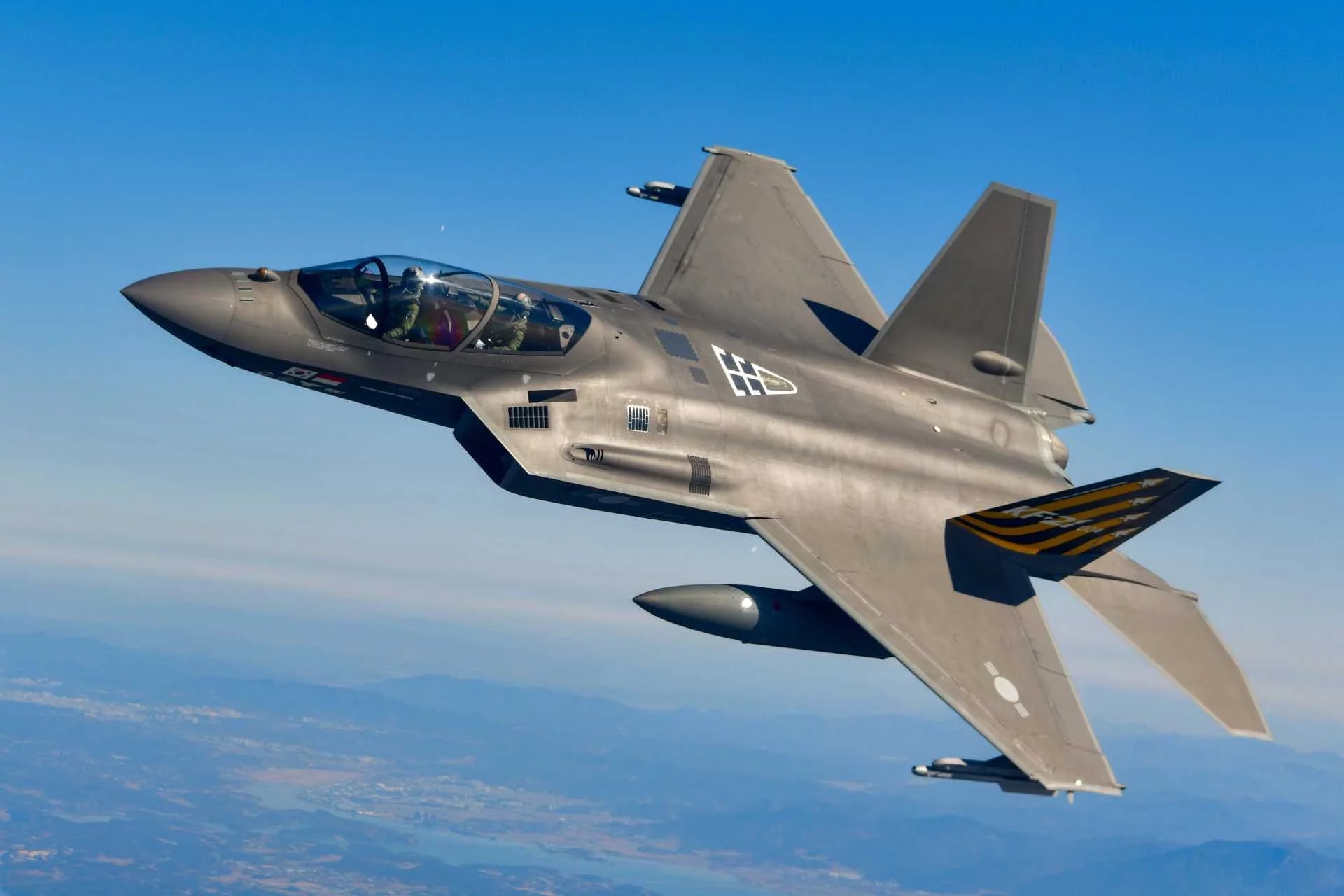
Indonesia is poised to significantly revitalize its participation in South Korea’s KF-21 Boramae fighter jet program, with emerging indications that Jakarta is advancing toward the acquisition of 16 Block 2 aircraft to address a long-stalled joint development agreement.
The initiative gained momentum following a high-level proposal by Indonesian President Prabowo Subianto during bilateral discussions with South Korean President Lee Jae-myung on the sidelines of the APEC Summit in October 2025. This was followed by a key closed-door meeting at Indonesia’s Ministry of Defence in Jakarta on January 7, 2026.
The session, chaired by Air Commodore Jon Ginting (Head of Programme and Evaluation at the Defence Logistics Agency), included representatives from Korea Aerospace Industries (KAI) and Indonesia’s state-owned aerospace company, PT Dirgantara Indonesia (PTDI).
Central to the discussions was the anticipated provision of an export credit facility by the South Korean government, facilitated through the Export-Import Bank of Korea (Exim Bank). This financing mechanism is expected to ease Indonesia’s financial commitments and support the procurement of the 16 Block 2 fighters—sufficient to outfit a complete squadron for the Indonesian Air Force.
While specifics on the credit structure remain undisclosed, the proposal focuses on the more advanced Block 2 configuration, which incorporates enhanced multirole capabilities, including improved air-to-ground and reconnaissance features compared to the initial Block I variant (deliveries of which to the Republic of Korea Air Force are slated to begin in 2026).
No confirmation has been provided on whether this move signals a revision to Indonesia’s earlier ambition of procuring up to 48 aircraft overall, though the current emphasis on Block 2 aligns with the program’s phased maturation timeline, with Block II development targeted for completion around 2027–2028.
This development reflects renewed bilateral defense momentum and could mark a pivotal step in strengthening Indonesia’s aerial capabilities amid evolving regional security needs.