
US Introduces Mandatory Ebola Declaration for All International Flights, Including Airline Crew
The new CDC requirement took effect on 3 November 2026. All passengers and operating crew travelling to or through the United States must declare whether they have been in the Democratic Republic of the Congo during the previous 21 days.
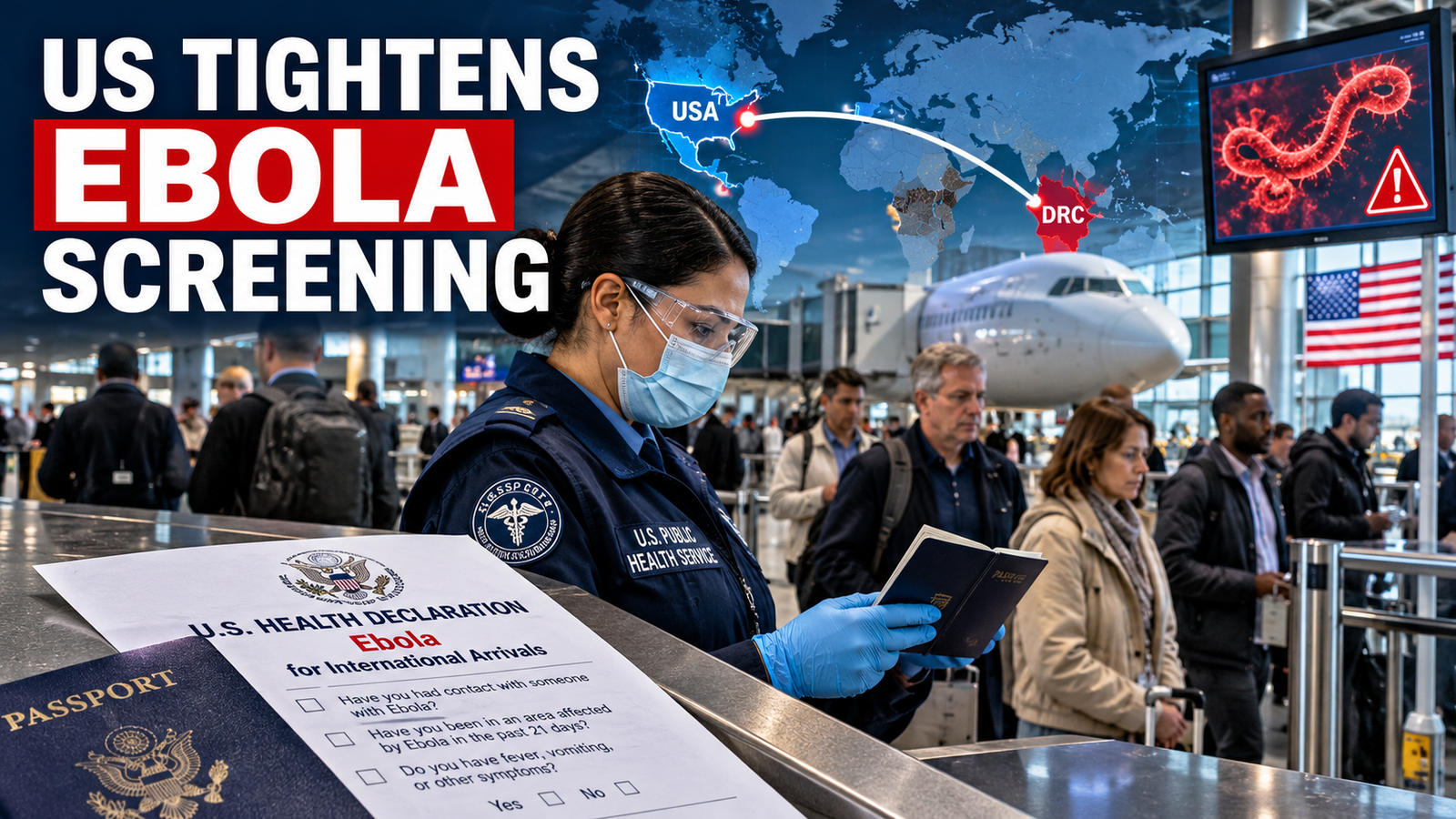
The United States has introduced a mandatory health declaration for everyone travelling on international flights to the country, tightening aviation-related public health measures amid an ongoing Ebola outbreak in the Democratic Republic of the Congo (DRC).
The requirement, introduced by the US Centers for Disease Control and Prevention (CDC), became effective at 11:59 p.m. Eastern Standard Time on 3 November 2026. It applies to passengers and relevant aircraft crew members, irrespective of their nationality or the country from which their journey originates.
Under the new directive, every individual must sign a declaration confirming that they have not been physically present in the DRC during the 21 days preceding their flight to the United States. The requirement also covers passengers connecting through the United States to another international destination.
Airlines Face New Passenger and Crew Verification Responsibilities
The new directive places additional responsibilities on airlines and aircraft operators. Carriers must collect the signed declarations before boarding and retain the records for possible inspection by US health authorities.
The requirement is not limited to commercial passenger airlines. It also covers private, cargo and other relevant aircraft operations, including crew members travelling in connection with aircraft operations.
The CDC clarified the scope of the requirement in an amended order issued on 28 October 2026, specifically addressing flight crew and personnel travelling in a non-operating capacity, commonly known in the aviation industry as deadheading.
Passengers or crew members who fail to complete the declaration will generally not be permitted to board a US-bound flight, unless they qualify for an exemption authorised by the US government.
Providing deliberately false or misleading information may also result in criminal penalties under US federal law.
Why the United States Has Introduced the New Measures
The decision follows an Ebola outbreak involving the Bundibugyo virus in the Democratic Republic of the Congo.
The CDC has been implementing travel restrictions and public health measures to prevent the virus from spreading internationally. Earlier restrictions prevented individuals who had been in the DRC during the preceding 21 days from boarding flights to the United States. These restrictions were subsequently extended to include US citizens and nationals.
The new declaration system adds a formal verification mechanism to the existing restrictions. Rather than relying exclusively on travel screening and boarding checks, US authorities will now require a signed record from every individual covered by the order.
The 21-day period is based on the maximum recognised incubation period for Ebola disease. It is intended to cover the period during which an infected individual could develop symptoms following exposure.
What the New Rule Means for International Travellers
The requirement has several important implications for international air travel:
- All nationalities covered: US citizens, permanent residents and foreign nationals must comply.
- All departure countries covered: The declaration applies even to travellers departing from countries with no reported Ebola outbreak.
- Transit passengers included: Passengers connecting through a US airport must also complete the declaration.
- Airport transit in the DRC counts: Travellers who merely transit through a DRC airport, without leaving the airport or aircraft, are considered to have been present in the country.
- Crew members included: Relevant operating and positioning crew members must also comply.
The CDC’s 21-day calculation is based on calendar days. The day a person leaves the DRC is counted as Day 0, while the first complete day outside the country is Day 1. A traveller may board a US-bound flight from Day 22, provided all other applicable travel requirements are met.
Implications for the Global Aviation Industry
The new directive introduces another layer of administrative responsibility for international airlines. Carriers will need to incorporate the declaration into their check-in and boarding procedures, ensure that passengers and crew complete the required documentation, and maintain records for regulatory verification.
For airlines operating multiple international routes, this could require adjustments to existing digital check-in systems, passenger processing procedures and crew travel arrangements.
The measure also demonstrates how infectious disease outbreaks can directly influence international aviation operations, even when the outbreak is geographically concentrated in a particular region.
Although the additional documentation may create inconvenience for travellers and airlines, the US authorities consider it a necessary precaution to reduce the possibility of Ebola being introduced through international air travel.
The CDC has emphasised that the overall risk to the American public and travellers remains low. Nevertheless, the new declaration requirement reflects the importance Washington attaches to preventing the international spread of potentially serious infectious diseases.
For international travellers, the practical message is straightforward: anyone flying to or connecting through the United States must comply with the new declaration requirement before boarding.