

Why the Airbus A380 Still Outshines the Boeing 747 for Passengers in 2026
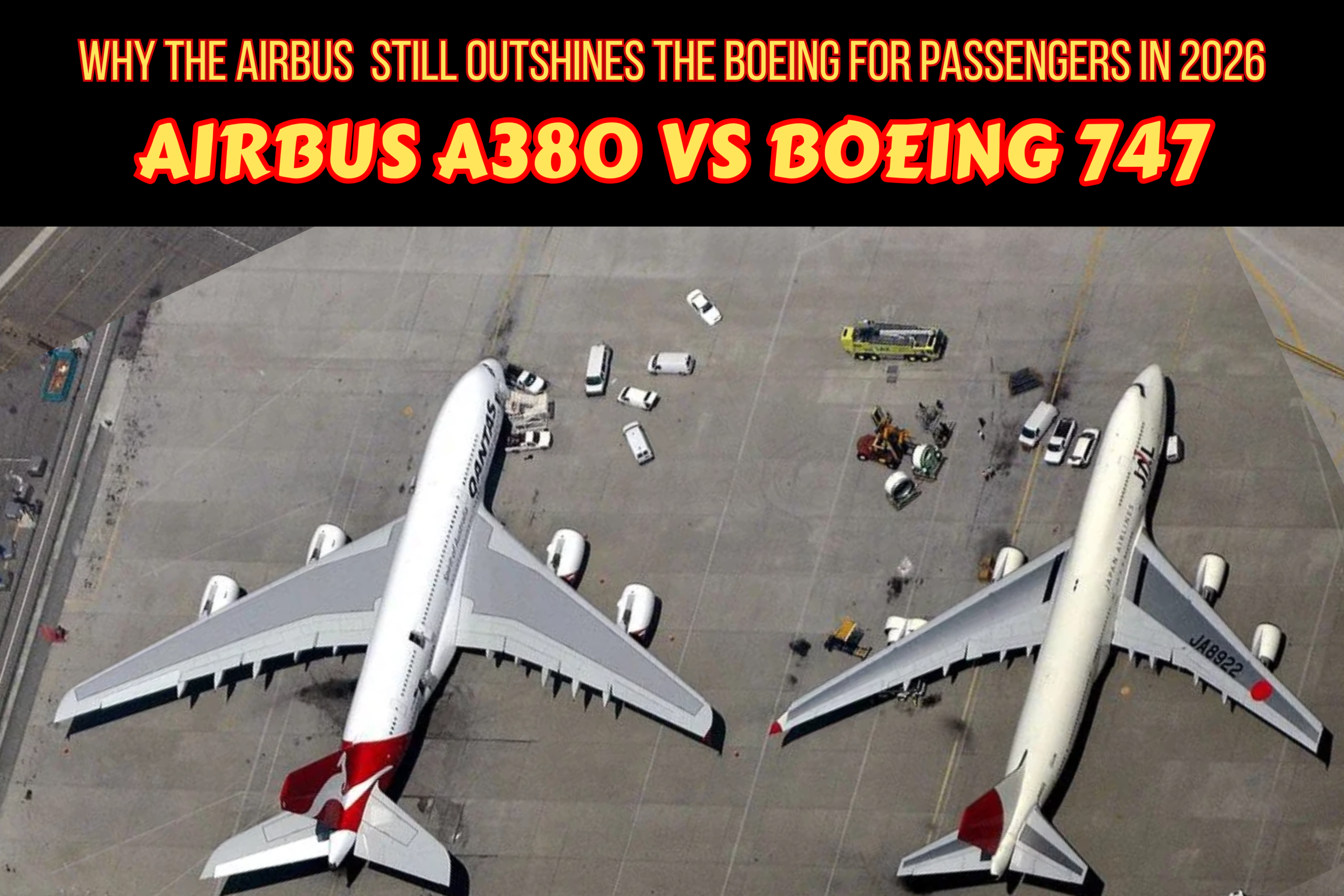
As aviation evolves, the debate between the Airbus A380 and Boeing 747 continues, but from a passenger’s viewpoint, the A380 edges ahead in comfort, space, and overall experience. While the 747, affectionately known as the “Queen of the Skies,” revolutionized air travel since the 1960s with its iconic hump and cargo origins, the A380 was purpose-built for passengers in the 21st century. Production for both has ended—the A380 in 2021 and the 747 in 2023—but around 186 A380s remain active, offering a superior ride on high-demand routes. Let’s dive into the key benefits, updated with the latest insights from 2026.
Unmatched Spaciousness and Comfort
The A380’s double-deck design provides nearly 50% more floor space (5,920 sq ft vs. 3,982 sq ft on the 747), creating an airier, less cramped feel even in economy. Its main deck is 20 inches wider, allowing for 10-abreast seating with 18.5-inch seats and generous aisles. In contrast, the 747’s upper deck, while charming, has a curved sidewall that can make window seats feel confined, and its shorter length limits premium options.
Passengers often describe the A380 as feeling like a “floating cruise ship”—stable, smooth, and less prone to turbulence thanks to its massive size and four-engine setup. Recent reviews highlight larger windows for better views, especially on the upper deck, which feels more exclusive and quieter. Airlines like Emirates have mastered this with zoned cabins that reduce congestion and fatigue on ultra-long hauls.
Whisper-Quiet Cabin and Reduced Fatigue
One of the A380’s standout features is its noise level—up to four times quieter than the 747, thanks to advanced engines and insulation. You might not even notice takeoff! This quietness, combined with a lower cabin altitude and better humidity control, minimizes jet lag compared to older jets like the 747-400. In 2026, passengers report feeling fresher after long flights on the A380.
Luxury Amenities and Flexibility
The A380’s vast space enables unique perks unavailable on the 747, such as onboard lounges, bars, and even showers in first class on Emirates flights. Its full-length upper deck rivals a Boeing 777 in width, perfect for premium setups. The 747’s tapered fuselage and shorter upper deck restrict such innovations.
Recent upgrades amplify this: Lufthansa is rolling out a new 1-2-1 business class on its A380s starting April 2026, with direct aisle access, 58 cm seat width, two-meter beds, and Bluetooth connectivity for enhanced privacy and comfort. This prioritizes quality over quantity, reducing seats from 78 to 68 but boosting the premium experience.
Efficiency and Operational Edge
On a per-passenger basis, the A380 is more fuel-efficient, achieving 74-80 mpg per seat vs. 65-74 for the 747, thanks to its capacity (up to 853 passengers) and modern design. It also complies better with noise restrictions at airports, enabling late-night operations. However, boarding can be slower without proper gates, and availability is shrinking as airlines favor twins like the 787 or A350.
Comparison Table: A380 vs. 747 at a Glance
| Feature | Airbus A380 | Boeing 747 (747-400/747-8) |
|---|---|---|
| Floor Space | 5,920 sq ft (50% more) | 3,982 sq ft |
| Passenger Capacity | Typical: 525; Max: 853 | Typical: 416; Max: 660 |
| Cabin Width (Main Deck) | 21 ft (6.54 m) | 20 ft (6.13 m) |
| Noise Level | Up to 4x quieter | Louder, especially older models |
| Fuel Efficiency (per seat mpg) | 74-80 | 65-74 |
| Unique Amenities | Lounges, showers, bars (e.g., Emirates) | Limited by space; upper deck intimate but short |
| Stability & Comfort | Smoother, less turbulence feel | More vibration; iconic but dated |
| 2026 Updates | Lufthansa 1-2-1 business upgrades | Mostly cargo focus; passenger fleets retiring |
| Active Fleet | ~186 | ~29 passenger (many stored) |
In summary, if you’re chasing ultimate comfort on busy long-haul routes in 2026, book the A380—it’s the passenger’s choice for a serene, spacious journey. The 747 holds historical charm, but the A380 delivers the modern edge.




A really good blog and me back again.