
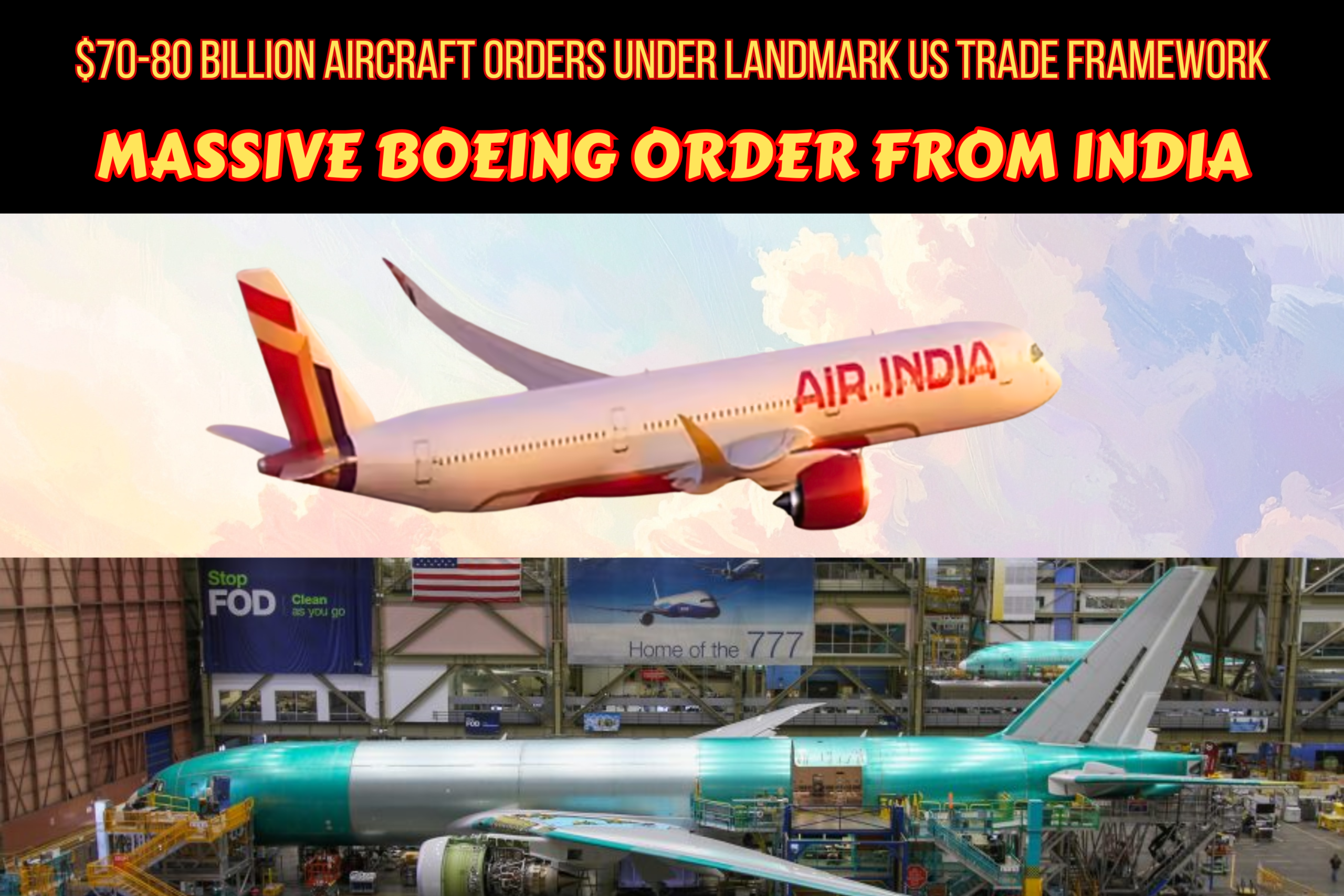
Massive Boeing Boost: India Poised for $70-80 Billion (Potentially $100B+) Aircraft Orders Under Landmark US Trade Framework
The emerging India-US trade framework — finalized in its interim phase in early February 2026 — is poised to dramatically accelerate Boeing’s footprint in the world’s fastest-growing aviation market. India’s Commerce and Industry Minister Piyush Goyal has publicly stated that the country is “ready” to place Boeing aircraft orders valued at $70-80 billion, with the total potentially exceeding $100 billion when engines, spare parts, maintenance support, and related services are included.
This figure represents a robust pipeline rather than one giant government-led contract. It combines existing firm orders (already around $50 billion for Boeing aircraft alone, plus engines and spares) with additional commitments “ready to be placed” by major Indian carriers. Goyal emphasized that aviation needs could easily surpass $100 billion in the coming years, driven by India’s explosive air travel demand and ambitions to become a $30 trillion economy.
India’s broader plan involves intending to source approximately $500 billion worth of US goods over the next five years, covering sectors like energy (crude oil, LNG, LPG), aircraft and parts, technology products (including chips), precious metals, and coking coal. Goyal described this $500 billion target as “extremely conservative,” noting India’s current import needs for such items already hover around $300 billion annually from global sources — with significant potential to shift toward the US. He clarified it’s based on commercial intent and economic realities, not a binding obligation.
Key Drivers in Aviation:
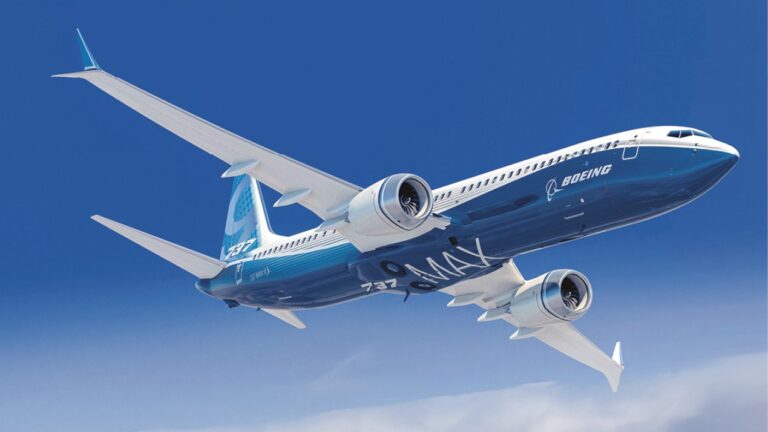
- Air India’s massive backlog — The Tata Group-owned carrier has nearly 250 Boeing jets on order following its historic 2023 mega-deal (mix of narrowbody and widebody) and recent additions. In late January 2026, Air India exercised options for 30 more 737 MAX aircraft (20 × 737-8 and 10 × 737-10 variants) to support domestic/regional growth and fuel-efficient operations. This brings its Boeing commitments to around 200 aircraft across families, with deliveries ongoing (e.g., first new 787-9 Dreamliners entering service in 2026 with refreshed cabins).
- Other carriers — Emerging low-cost players like Akasa Air (heavy on 737 MAX) contribute to the pipeline. Speculation points to potential widebody orders from carriers like IndiGo, which Boeing is actively pursuing.
- Trade incentives — The interim deal includes US tariff reductions on Indian goods to 18% (with reciprocal benefits), zero-duty access for Indian aerospace components to the US market, and eased non-tariff barriers. This makes Boeing aircraft, engines, and parts more cost-competitive for Indian airlines while boosting India’s aerospace exports (currently ~$1.25-1.5 billion annually for Boeing/Airbus combined). Boeing plans to double its sourcing from India, positioning it as a major global supplier.
The full formal agreement is expected to be signed in March 2026, following a joint statement and 30-45 days of finalization. This strengthens bilateral ties, enhances local manufacturing and supply chains under “Make in India,” and underscores India’s rise as a global aviation powerhouse amid surging passenger traffic and international expansion.
This development not only secures Boeing’s long-term order book in a high-growth region but also deepens the strategic US-India partnership in aerospace and beyond.