
EASA’s Urgent Advisory: Why European Airlines Must Steer Clear of Iranian Airspace Amid Escalating Risks
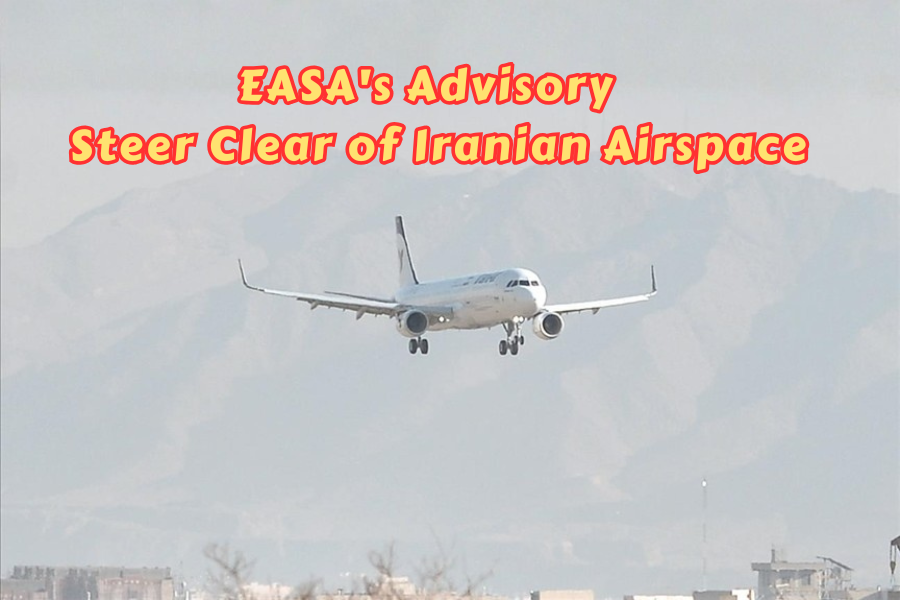
The European Union Aviation Safety Agency (EASA) has issued a stark advisory urging European airlines to steer clear of Iranian airspace entirely, classifying it as a high-risk zone for civil aviation operations. Released on January 16, 2026, through a Conflict Zone Information Bulletin (CZIB 2026-02) valid until mid-February, this guidance reflects acute concerns over regional instability, heightened military alertness, and the ever-present danger of tragic misidentification in one of the world’s most volatile corridors.
At the heart of EASA’s warning lies the combination of ongoing geopolitical tensions — including Iran’s internal unrest, recent crackdowns on protests, and the unpredictable fallout from broader Middle East dynamics — with explicit threats of potential U.S. military intervention. Senior U.S. officials, including statements attributed to President Trump and Ambassador Mike Waltz, have kept “all options on the table,” placing Iranian air defense forces on maximum alert. In such an environment, advanced surface-to-air missile systems, fighter aircraft, and other weaponry could mistake a commercial jet for a hostile target, especially amid electronic warfare, spoofing, or rapid escalation scenarios.
This risk is far from theoretical. EASA’s bulletin explicitly highlights “an increased likelihood of misidentification within Iranian airspace,” echoing the devastating lessons of past incidents. The most poignant reminder remains the January 8, 2020, downing of Ukraine International Airlines Flight PS752, a Boeing 737-800 shot down shortly after takeoff from Tehran by Iranian forces mistaking it for an incoming U.S. cruise missile during heightened U.S.-Iran tensions. All 176 people on board perished in what Iran later acknowledged as a tragic human error under stress. That event triggered widespread airspace closures and reroutes, and it continues to shape global risk assessments today.
In practical terms, the advisory applies to the entire Tehran Flight Information Region (FIR OIIX), encompassing Iranian sovereign airspace at all altitudes and flight levels. EASA recommends that operators:
- Completely avoid Iranian airspace where feasible.
- Exercise heightened caution in neighboring FIRs (such as those over Iraq, the Persian Gulf states, Azerbaijan, Turkmenistan, Afghanistan, and Pakistan).
- Conduct thorough risk evaluations before finalizing route planning.
- Remain vigilant for sudden NOTAMs (Notices to Airmen), temporary airspace closures, or military activity bulletins.
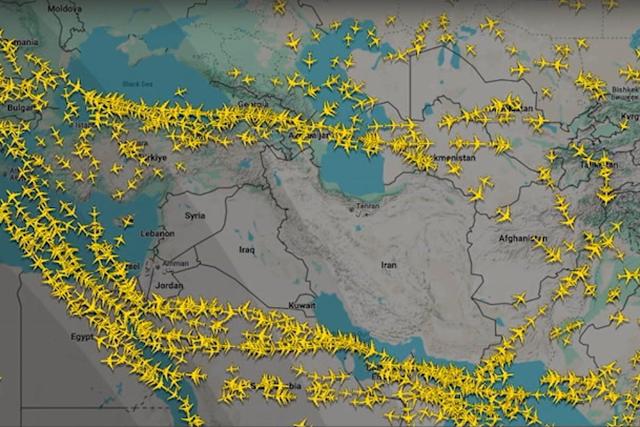
Many European carriers had already begun proactive rerouting even before the formal bulletin. Major airlines including Lufthansa, British Airways, Wizz Air, and KLM have consistently avoided Iranian — and often Iraqi — airspace in recent weeks, opting for longer but demonstrably safer paths. For long-haul services connecting Europe to South Asia, Southeast Asia, or the Far East, common alternatives include:
- Eastern reroutes — over northern Turkey, Azerbaijan, the Caspian Sea, Turkmenistan, Afghanistan, and Pakistan before descending toward India or beyond. This path adds modest time and fuel burn but bypasses the core risk areas.
- Western detours — skirting via Iraq (where permitted), Kuwait, the UAE, Oman, and the Arabian Sea approaches.
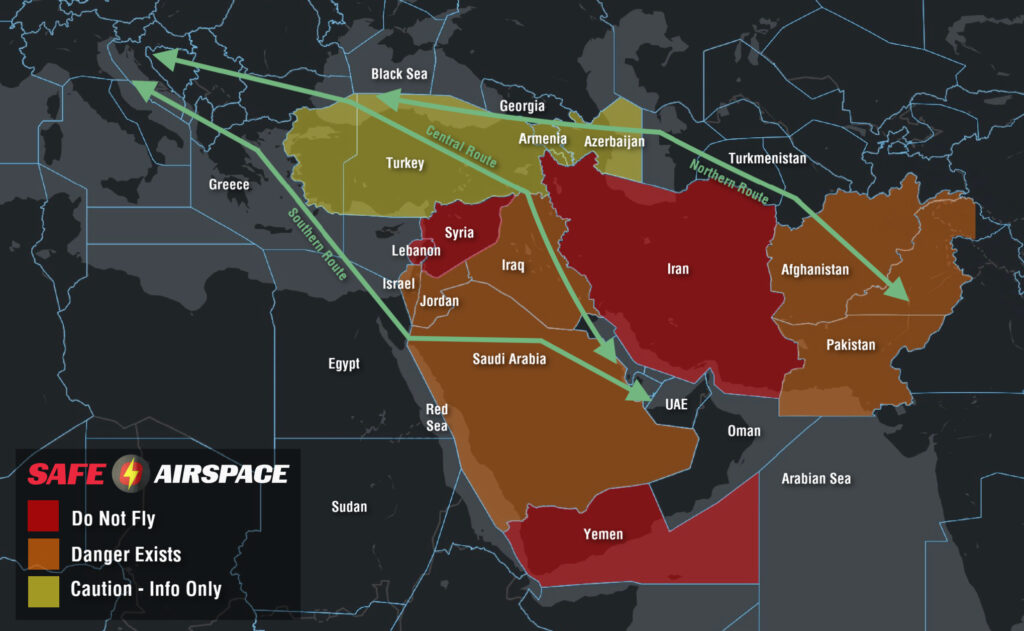
Examples from recent operations illustrate the shift: Air India’s Vienna-Mumbai service, SriLankan Airlines’ similar route, Scandinavian Airlines’ Copenhagen-Bangkok flight, and LOT Polish Airlines’ Warsaw-Ho Chi Minh City leg have all adopted these adjustments with minimal schedule disruption. Meanwhile, some Gulf-based carriers like flydubai, Etihad, and Azerbaijan Airlines continue select overflights or departures from regional hubs, though even they monitor developments closely.
From an aviation management standpoint, this advisory highlights several critical imperatives in today’s geopolitical climate:
- Dynamic risk assessment: Airlines must integrate real-time intelligence from sources like EASA CZIBs, national NOTAMs, OPSGROUP advisories, and Safe Airspace databases into flight planning systems. Static route networks are no longer sufficient; contingency planning is essential.
- Operational and economic trade-offs: Reroutes impose tangible costs — higher fuel consumption, crew duty-time extensions, potential schedule disruptions, and environmental impacts amid rising pressure to meet net-zero targets. Yet, the non-negotiable priority remains safety, as any incident would carry catastrophic human, financial, and reputational consequences.
- Passenger communication and trust: Transparent messaging about safety-driven changes reassures travelers and maintains confidence. Airlines that proactively explain reroutes (e.g., “For your safety, we’ve adjusted this route to avoid high-risk airspace”) strengthen loyalty rather than erode it.
- Diplomatic and regulatory alignment: EASA’s measured tone — evidence-based, non-sensational, and coordinated with EU member states and the European Commission — exemplifies responsible governance. It reinforces a collective international framework for conflict-zone aviation risks, building on frameworks established post-PS752 and other tragedies.
The broader context includes Iran’s short-notice airspace closure earlier in January, which forced diversions and cancellations, underscoring the unpredictability. While Iranian authorities reopened the airspace swiftly, the underlying triggers — domestic unrest and external military posturing — persist, keeping alert levels elevated.
As of January 19, 2026, the situation has shown signs of slight de-escalation. Iran reopened its airspace on January 15 following a brief, approximately five-hour closure that disrupted regional flights and prompted diversions. U.S. personnel at Al Udeid Air Base in Qatar, who had been partially evacuated or placed on heightened alert as a precautionary measure amid rising tensions, have largely returned or seen the security posture eased.
Despite these developments, European airlines and operators remain highly cautious. They continue to monitor the situation hourly, guided by the ongoing EASA Conflict Zone Information Bulletin (CZIB 2026-02), which advises avoidance of Iranian airspace due to persistent risks of misidentification, short-notice closures, and broader geopolitical volatility. The core principle in aviation remains unchanged: safety is absolute. When intelligence signals elevated threats—whether from potential misidentification of civil aircraft or the risk of rapid escalation—avoidance is not merely a precaution; it is a fundamental duty.
This measured vigilance ensures that commercial operations prioritize passenger and crew safety above all else, even as temporary stabilizations occur in an otherwise fluid and unpredictable environment.